
Kotak Bank was the top loser in the Sensex pack, shedding over 2 per cent, followed by ICICI Bank, PowerGrid, HDFC, IndusInd Bank and Axis Bank. NSE Nifty declined 45.75 points to 16,568.85.
The combined market-cap of all listed Adani group firms has plunged nearly Rs 7.11 trillion since January 24 when the Hindenburg report was made public.
'I'm pitching India for the strengths we offer, including the English language, engineers, doctors, nurses, professionals, innovative talent of startups.'

'The home ministry has made a serious allegation to the media without providing a scrap of evidence to back it up. We think this shows how worried the ministry has become.'

Benchmark indices bounced back on Wednesday after falling for five straight sessions, with investors snapping up the recently-mauled IT, finance and consumption stocks amid a supportive trend overseas. A rebounding rupee further bolstered sentiment, traders said. Halting its five-session slide, the BSE Sensex jumped 574.35 points or 1.02 per cent to finish at 57,037.50. Similarly, the NSE Nifty surged 177.90 points or 1.05 per cent to 17,136.55.

'Today, three areas give banks a big headache -- steel, power, infrastructure.' 'Three Cs are very critical in lending -- character, capacity and collateral of the borrower.'
Changes in global oil and gas rates matter more to India's economy than other major economies because the country imports around 87 per cent of its oil, half of its gas in the form of LNG, and over 60 per cent of its LPG.

The Reserve Bank of India (RBI) on Wednesday announced to increase the policy repo rate by 50 basis points to 4.9 per cent, the second hike in five weeks aimed at quelling the inflation. The MPC vote was unanimous and has decided to keep stance withdrawal from accommodative, RBI Governor Shaktikanta Das said in a press conference on Wednesday. The decision was taken during a three-day meeting of the RBI's Monetary Policy Committee (MPC) to review the interest rates in the country. The MPC voted unanimously to increase the policy repo rate by 50 bps to 4.90 per cent," Das said.

10 non-bank and non-finance stocks from the BSE500 Index universe that offer an optimal blend of low valuation, reasonably robust revenue and earnings growth in recent quarters, a strong balance sheet, and most importantly, positive cash flow from their operations.

'We suggest investors with suitable risk appetite to consider allocating 40-50 per cent in large-caps, 25-30 per cent of funds in quality mid and small-caps and the rest in debt and high yield products.'
Attributing the growth to an upswing in consumption and investment, the World Bank has said India will continue to be the fastest growing major economy in the world.
Powered by a rally in index heavyweight Reliance Industries, equity benchmark Sensex broke its four-session losing run to close above the 55,000-mark on Thursday despite a weak trend overseas. Investors made a cautious return to IT, pharma and bank stocks after their recent sell-off. However, a depreciating rupee and persistent foreign fund outflows capped the gains, traders said. Overcoming a lacklustre start, the 30-share BSE Sensex surged 427.79 points or 0.78 per cent to close at 55,320.28.

"India has given a stern signal to its enemies by conducting surgical and air strikes. This tells us that India is changing and can take the most difficult decisions and isn't reluctant to implement them," Prime Minister Narendra Modi said on Sunday in his Independence Day address to the nation.

The government should not go in for an 'aggressive fiscal consolidation' in the upcoming Budget as global risks have not abated, RBI Monetary Policy Committee (MPC) Member Ashima Goyal said on Wednesday. Goyal further said subsidies are expected to come down as food and energy inflation moderates. WPI inflation in food articles in November was 1.07 per cent against 8.33 per cent in the previous month.

The external environment has worsened further. While the Finnish economy entered into a recession, Swedish economic growth also dipped. The Finnish gross domestic product (GDP) dropped 0.6 per cent in October-December, 2022. It was the second quarter of negative growth, which is a technical definition of recession.

Moody's and Fitch on Thursday downgraded Russia's sovereign rating to 'junk' grade following severe sanctions by western countries. While Moody's Investors Service downgraded Russia's long-term issuer and senior unsecured (local-and foreign-currency) debt ratings to 'B3' from 'Baa3', Fitch pulled down the rating on the country to 'B' from 'BBB', putting it on 'Rating Watch Negative'. The downgraded rating is in speculative or junk category reflecting default risk. It signifies that even through financial commitments are currently being met, the sovereign is vulnerable to high credit risk.

'Although strong arm tactics do cause inconvenience, they have not been able to stop us from carrying out our campaigns.' 'Allegations about being 'anti-development' mean very little when people in the country are still going hungry.' Greenpeace India chief Ravi Chellam on the challenges ahead.

In the last of a six-part series Sanjay Jog discovers that if the government and beedi employers don't act now, there could be social unrest soon.

Greenpeace India on Tuesday said it was staring at an "imminent" shutdown within a month in the absence of funds.

India Inc's quarterly net profit reached a record high of Rs 1.64 trillion in the third quarter ended December 31, 2020, mainly due to gains from higher commodity prices and a big swing in banks' earnings. The combined net profit of 3,323 listed companies that have declared results so far was up 68.6 per cent year-on-year (YoY). In comparison, earnings were up six times (534 per cent) in the second quarter and 6.5 per cent in the corresponding period last year.

'Flush with funds, lending became a cash management exercise.' 'Road projects, power generation plants, airports etc were financed left and right with apparently no regard for the projects' ability to repay,' explains S Muralidharan, former managing director, BNP Paribas.
India's GDP growth to reach 8% by 2017. says World Bank
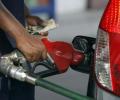
A looming global shortage of diesel in Europe presents India with more than one opportunity to profit from strong margins. A shortage of the fuel, a key contributor to inflation, has been exacerbated by the conflict in Ukraine, and western sanctions on Russian fuel supplies. The slowdown in natural gas supply means the West needs diesel to heat their homes this winter.

George Soros, who is in the eye of the storm over his remarks against Prime Minister Narendra Modi on the Adani issue, is an Hungarian-born American financier, philanthropist, and activist whose success as an investor made him one of the wealthiest men in the world. He is also known as a powerful and influential supporter of liberal social causes. In a speech at the Munich Security Conference on Thursday, the billionaire philanthropist said he believes the turmoil at Gautam Adani's business empire may weaken Prime Minister Narendra Modi's hold on the government, a statement which was strongly contested by the BJP as an attack on Indian democracy.

In twin blows to Indian economic revival, higher food prices drove retail inflation to a five-month high of 7.4 per cent while factory output fell for the first time in 18 months. The second consecutive month of rise in consumer price index (CPI)-based inflation will add to the pressure on the Reserve Bank of India (RBI) to again raise interest rates to tame high prices. Inflation has been above the targeted zone for the ninth month in a row and as per statute, the RBI will now have to explain to the government in writing why it failed to keep prices below 6 per cent.

Every 10 per cent rise in crude oil price will shave off around 0.2 percentage point (pp) from India's GDP growth and widen the current account by 0.3 per cent, says Nomura.

International oil prices retreated from an over seven-year high but was still above $100 a barrel and continue to pose threat to India's inflation rate and current account deficit. While there are no supply concerns as the oil route remained open, consumers will feel the pinch when PSU oil firms start passing on the increase in international rates through a revision in petrol and diesel prices, which have been on a pause for over three-and-a-half-months in view of elections in Uttar Pradesh and four other states. The government is "closely monitoring the situation" and will "take appropriate steps as and when required", a top official said. Brent crude oil surged past $105 per barrel on Thursday for the first time since August 2014, following Russia's invasion of Ukraine.
Leading economists have pencilled in a high 13-15.7 per cent uptick in the economy in the first quarter of 2022-23 with an upward bias. Soumya Kanti Ghosh, the group chief economic adviser at State Bank of India, on Tuesday said he expects the GDP to clip past 15.7 per cent in the first quarter with more chances of the final numbers printing in higher, while Aditi Nayar, the chief economist at the rating agency Icra, said the economy will grow much lower at 13 per cent in the June quarter. The national statistical office will announce the first quarter GDP numbers later next week.

Retail inflation softened to 6.71 per cent in July due to moderation in food prices but remained above the Reserve Bank's comfort level of 6 per cent for the seventh consecutive month. With retail inflation continuing to remain high despite a fall in prices of vegetables and edible oils, among other commodities in July, the Reserve Bank of India (RBI) might go for another rate hike in September. The Consumer Price Index (CPI) based retail inflation was at 7.01 per cent in June and 5.59 per cent in July 2021. It was above 7 per cent from April to June this fiscal.
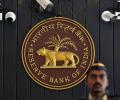
Rs 5,000 crore additional liquidity facility to be provided by the National Housing Bank to boost liquidity in housing sector, the RBI said.
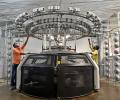
Manufacturing companies have been outperformers on the bourses in the current year, leading to a rise in their weighting in the benchmark index. Companies in sectors such as FMCG, automobile, pharmaceuticals, metals, cement, and agrochemicals now account for 25.43 per cent of the Nifty 50 index, up 88 basis points from 24.55 per cent at the end of December last year and a record low of 23.1 per cent at the end of CY20. The manufacturing sector is now dominated by FMCG majors such as Hindustan Unilever, ITC, Asian Paints, Nestle, and Britannia, accounting for 45 per cent of the combined market cap of all manufacturing companies in the index.
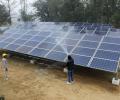
Son's offer to supply free power after 25 years is based on the idea that the cost of running a solar plant would progressively decline while its efficiency would increase.

Bajaj Auto was the top gainer in the Sensex pack, surging 3.95 per cent followed by Maruti Suzuki at 2.69 per cent.

A day after Nationalist Congress Party leader Samir Bhujbal was arrested by the Enforcement Directorate in a money laundering case, the former member of Parliament was on Tuesday sent to the agency's custody until February 8 by a special PMLA court in Mumbai.

BharatPe co-founder Shashvat Nakrani has accused Ashneer Grover, with whom he had co-founded the payment startup, of creating a false narrative about the company, and said the board acted quickly and decisively in unseating him after receiving finds of a PwC report. BharatPe, which allows shop owners to make digital payments through QR codes, last week stripped Grover of all titles and positions over his alleged "misdeeds" and may take further legal actions, including clawing back of some of his shareholding. In a letter to employees, Nakrani said the Grover episode was an aberration and not the norm at BharatPe, and went on to defend the board who he said were celebrated names in the banking and financial services industry.
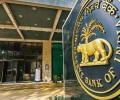
The Reserve Bank of India on Friday raised the benchmark lending rate by 50 basis points to 5.40 per cent to tame inflation.

India's economic growth is now 'extremely fragile' and needs all the support that it can get, as private consumption and capital investment are yet to pick up, RBI Monetary Policy Committee (MPC) member Jayanth R Varma said on Friday. Varma further said out of the four engines of growth for the economy, exports and government spending supported the Indian economy through the pandemic, but other engines need to pick up the baton now. " I like to think in terms of the four engines of growth for the economy: exports, government spending, capital investment and private consumption. "...while exports cannot be the main driver of growth because of the global slowdown, government spending is necessarily limited by fiscal constraints," he told PTI.
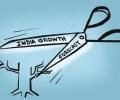
India's projected economic growth for 2022 has been downgraded by over two per cent to 4.6% by the United Nations, a decrease attributed to the ongoing war in Ukraine, with New Delhi expected to face restraints on energy access and prices, reflexes from trade sanctions, food inflation, tightening policies and financial instability, according to a UN report released on Thursday. The UN Conference on Trade and Development (UNCTAD) report downgraded its global economic growth projection for 2022 to 2.6 per cent from 3.6 per cent due to shocks from the Ukraine war and changes in macroeconomic policies that put developing countries particularly at risk. The report said while Russia will experience a deep recession this year, significant slowdowns in growth are expected in parts of Western Europe and Central, South and South-East Asia.

The RBI has shelved its plan for polymer notes more than a decade after it invited interest from global manufacturers for one billion pieces of Rs 10 denomination polymer banknotes, reveals Tamal Bandyopadhyay.
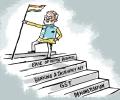
India's GDP expanded 13.5 per cent in the April-June quarter, the quickest pace in a year, to retain the world's fastest growing economy tag but rising interest costs and the looming threat of a recession in major world economies could slow the momentum in the coming quarters.
 © 2026 Rediff.com - Advertise with us - Disclaimer - Privacy Policy - Sitemap - Feedback - About us - Terms of use - Grievances